
AMADEUS Travel story
A culinary journey of discovery along the Danube
The eight-day journey from the three-river city of Passau to the magnificent Hungarian capital and back again allows guests to relax and glide through the millennia. In the four countries bordering the Danube Germany, Austria, Hungary, and Slovakia you can immerse yourself in the fascinating cultural history of Europe and embark on a truly enjoyable journey filled with authentic flavors.
Whether it's a glass of Grüner Veltliner with a view of the vineyards, a Hungarian dinner in Budapest, or a coffee break in a traditional Viennese café, each stop offers its own taste of history and joy of life.
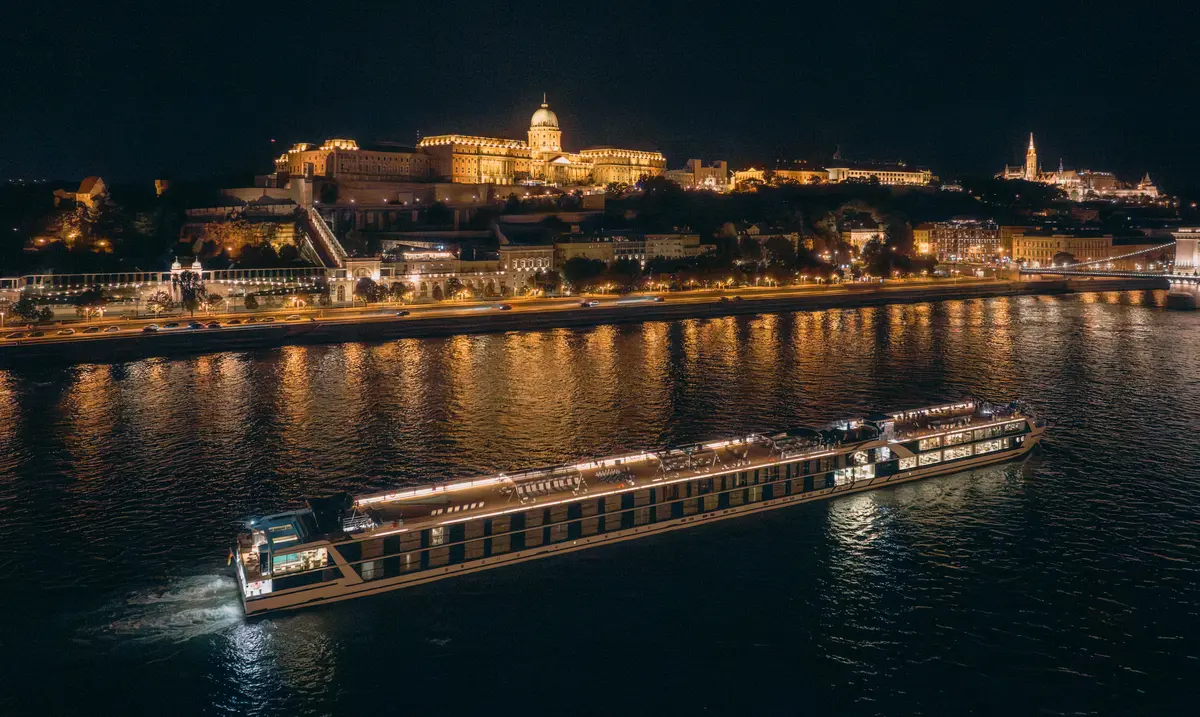
The Danube glistens like liquid silver as the AMADEUS Amara departs from Passau in the afternoon. Behind us, the colorful facades and majestic towers of St. Stephen's Cathedral, the landmark of the city of three rivers, fade into the distance. Ahead of us lies a journey that not only crosses meadows, hills, fields, and forests, proud cities, and pretty villages, but also offers sweet and savory temptations - culinary treasures that line the riverbank like pearls.
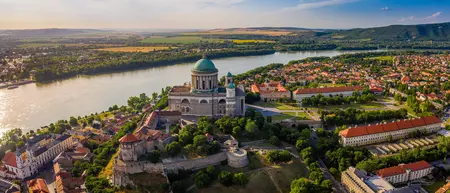
The Danube is particularly impressive in the picturesque Danube Bend near Visegrád and in the Wachau region of Lower Austria - that unique cultural landscape between Melk and Krems, where vineyards, orchards, and Baroque monasteries merge in the golden light.


Viennese coffee house magic
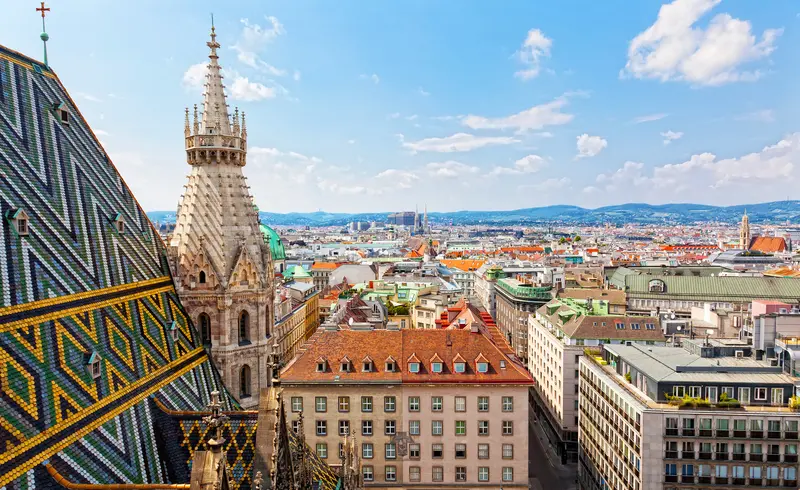
After enjoying what is probably the most beautiful part of our river journey - the crossing of the Wachau region - the silhouette of Vienna soon appears on the horizon. Countless domes, palaces, and the richly decorated facades of magnificent Art Nouveau buildings rise majestically and confidently.
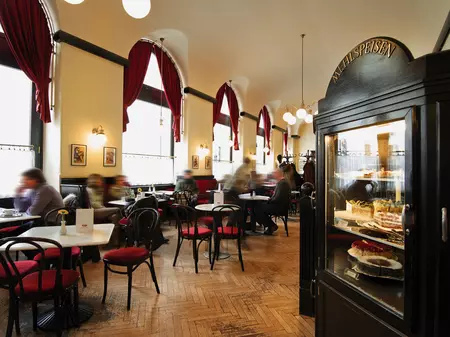
Even in the 21st century, Vienna's heart still beats in the coffee house. In subdued light, between tall mirrors and the sound of fine porcelain, the waiter serves a slice of Sachertorte with a cup of coffee. Beneath the glossy dark chocolate lies a layer of apricot jam, a sweet greeting from the Wachau region. One bite and the cake candidly tells of the opulence of Viennese elegance and the eternal interplay of bitterness and sweetness.
Viennese coffee house culture has been the heartbeat of the Austrian capital for centuries. It goes far beyond the tradition of drinking coffee and is a living part of the culture. Visitors, writers, artists, and politicians meet in elegant coffee houses furnished with marble tables and crystal chandeliers. As a slower-paced counterworld to hectic everyday life, coffee houses are places where you can spend hours reading the newspaper, discussing, or simply taking in the colorful hustle and bustle.
Culinary-wise, however, Vienna has much more to offer than melange, one-horse carriages, and sweet temptations. Typical pastries such as apple strudel and Kaiserschmarrn are an integral part of the city's culinary culture and are served everywhere. Hearty cuisine also characterizes the city: Wiener schnitzel, Tafelspitz, and goulash are culinary classics that are known far beyond the borders of Austria.
This unique combination of coffee house culture and diverse gastronomy makes Vienna a metropolis of indulgence, where culinary delights and a relaxed lifestyle merge inseparably.
The market halls of Budapest
The Danube may divide Budapest in two, but everything comes together in the city's market halls: smells, colors, voices, and a seemingly endless array of food of all kinds. Here, jars of pickled vegetables are stacked high, strudel steams on baking trays, and the irresistible aroma of Kürtőskalács wafts over from the stall opposite. Baumstriezel are baked until golden brown and crispy and generously sprinkled with cinnamon and sugar. With the first bite, the dough melts in your mouth, while the sugar crunches. Around me, crowds of people push their way through the halls, laughing, sampling, and haggling.
Budapest's market halls are more than just shopping venues; they are living stages of Hungarian food culture. First and foremost is the Great Market Hall at the end of Liberty Bridge: the irresistible aromas of fresh vegetables, ripe fruit, spicy salami, and countless varieties of paprika waft through the vaults of the imposing Art Nouveau building. Gourmets, locals, and travelers from all over the world mingle among the richly stocked stalls offering Tokaj wine, honey products, and pickled vegetables. Strolling through here, you will discover not only ingredients but also stories - from rural traditions to Hungary's imperial and royal past. Market halls connect the past and the future. They are a place where the culinary soul of Hungary is authentic yet constantly changing.
Another highlight of Budapest is Hungarian cuisine. It is hearty, aromatic, and distinctive. Pepper in all its nuances characterizes gulyás (goulash soup), pörkölt (meat ragout), and halászlé (fish soup). Lángos, fried flatbread with sour cream, garlic, and cheese - a street food with cult status - sizzles in the market galleries. And those with a sweet tooth will find classics such as Dobos torte with a crispy caramel crust or light and airy Somlói Galuska (a classic layered dessert made with sponge cake, chocolate, rum, and cream).
But alongside tradition, there is also innovation. Young restaurateurs are experimenting with old recipes, reducing the heaviness, focusing on regional products and thus giving the cuisine a surprisingly fresh lightness.



Historic wine region of Rača
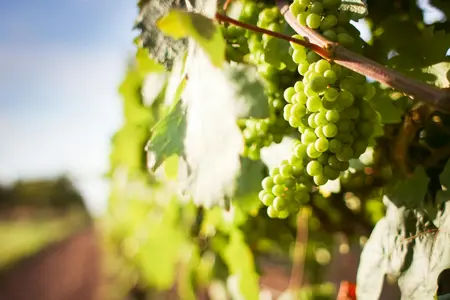
Rača is a traditional wine-growing village just outside Bratislava. A visit to the Terroir Rača winery is like a journey back in time to the world of Slovak viticulture. As soon as you are welcomed by winemaker Ivan Vrana, you can sense his close connection to his craft: with enthusiasm and professional pride, he shows visitors his vineyards on the rolling hills above the outskirts of the city. The ripening berries glisten in the late summer sunlight on the densely planted vines.
We start with a tour of the vineyards, where the winemaker explains the special features of the region. Rača is best known for its Frankovka-Modry, a Blaufränkisch grape that thrives here thanks to ideal conditions. Between the rows, we learn more about the soils, the care of the vines, and the cycle of the wine year. The winemaker talks passionately about his work in the vineyard and in the cellar.
After the walk, we head to the actual winery, where old stone walls create a beautiful setting in the courtyard. In an atmospheric atmosphere, we taste various wines: fresh white wines, elegant rosés, and, of course, the strong, ruby-red Frankovka. Each sip tells a story about the region, tradition, and modern craftsmanship. The tasting is accompanied by small regional specialties that round off the aromatic palette of Ivan's wines.
The excursion ends with a view over the vineyards back to the silhouette of Bratislava – a fascinating combination of city and nature. The village of Rača impressively demonstrates that just a few kilometers from the urban center of the Slovak capital, you can discover a traditional wine world that impresses with its hospitality, authenticity, and high-quality wines.
More than just Linzertorte
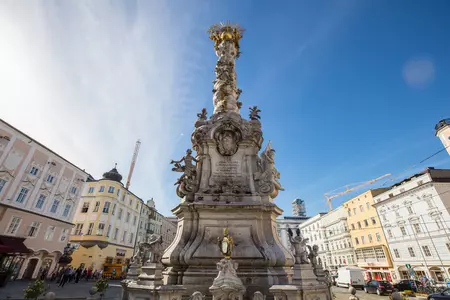
Although it is the third largest city after Vienna and Graz, the Upper Austrian capital of Linz welcomes travelers with open arms. On the return trip to Passau, the pretty Danube city seems less pompous than Vienna and more relaxed than Budapest.
In recent years, Linz has been transforming itself from an industrial to a cultural metropolis, but it also surprises and impresses with its cuisine. Its edible landmark is, of course, the famous Linzertorte. With its spiced nut shortcrust pastry, fruity redcurrant jam, and characteristic lattice pattern, this unique cake is considered the oldest cake recipe in the world. It is baked according to centuries-old recipes in traditional pastry shops, while young pâtissiers outdo each other with bold new interpretations.
But Linz's culinary map extends far beyond its famous dessert. Traditional restaurants serve up classic Austrian fare: roast pork with a crispy crust, all kinds of dumplings, and hearty stews that are down-to-earth and full of flavor. Game, fish from clear lakes, aromatic fruits, and fresh vegetables from the surrounding regions enrich the menus. If you have some time to spare, visit the Südbahnhofmarkt, Upper Austria's largest green market. Here, the diversity and seasonal offerings of local products are particularly impressive.
Linz is traditional, but at the same time looks confidently ahead to the future. Young kitchen teams experiment with international influences, play with textures, spices, and combinations, making the city an exciting venue for contemporary gastronomy.

The sweet thread of the Danube
As the ship returns to Passau on Saturday morning, the river journey echoes like a melodious musical composition. The Danube has not only taken us through Germany, Austria, Hungary, and Slovakia, it has also opened up new worlds of taste. Here, the golden fruits of Dürnstein and the elegant coffee house culture of Vienna; there, the abundance of Budapest's markets, the familiarity of the famous Linzertorte and, as a crowning glory, an insight into the surprisingly sophisticated wine culture just outside Bratislava. The river journey thus became a culinary symphony, whose sweet and savory notes will remain in our memories for a long time to come.
Author: © Matthias Reimann